
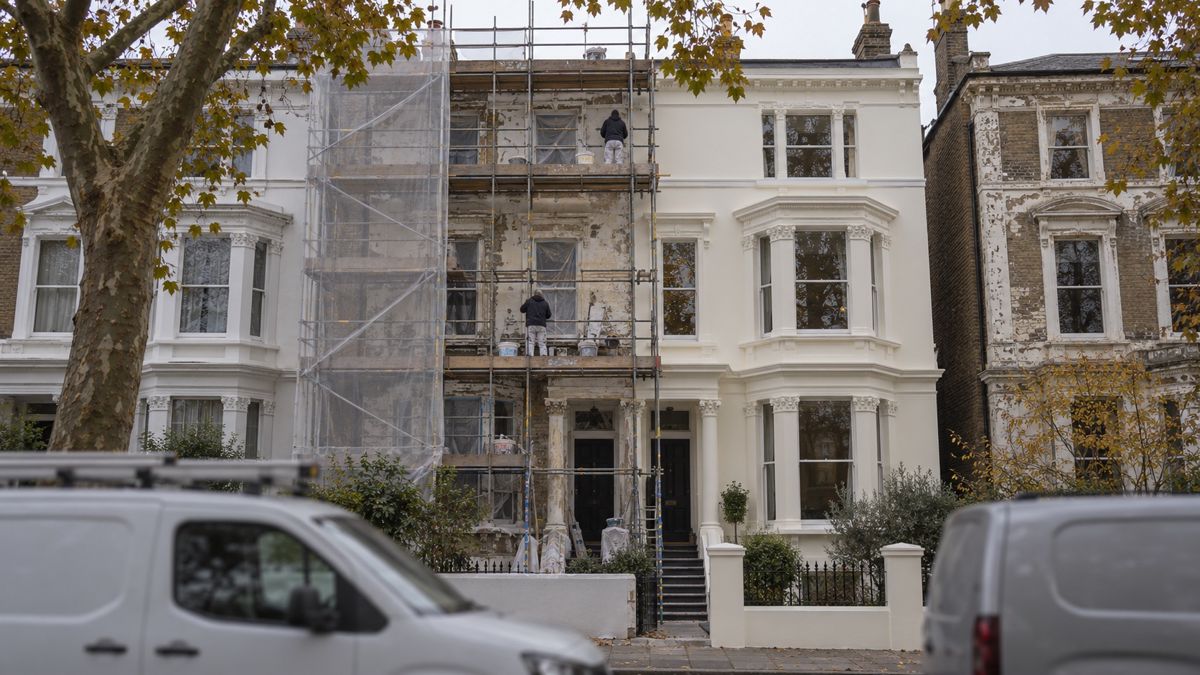
For a typical London house, painting the exterior usually costs somewhere in the low to mid thousands of pounds, and more for large or badly worn homes. The honest answer is that the price depends on the size of the house, the scaffolding it needs and how much repair work sits underneath the paint. The ranges below are rough market guides, not quotes from this business.
What is a rough price range for painting a house exterior in London?
London is one of the more expensive places in the country for tradespeople, mainly because of labour rates, parking and access. As a very broad guide, using recent general market figures:
- Repainting the front of a terraced house, including woodwork and windows: roughly £1,500 to £3,500.
- A whole exterior on a typical terraced or semi-detached house: roughly £3,000 to £6,000.
- Large semis, detached houses and stucco-fronted townhouses: often well above £6,000, depending on size and repairs.
Skilled decorators in London are often priced at roughly £180 to £300 a day each, though this varies by firm and job. Treat all of these as rough guides. A real price needs someone to look at your walls.
Why does scaffolding matter so much?
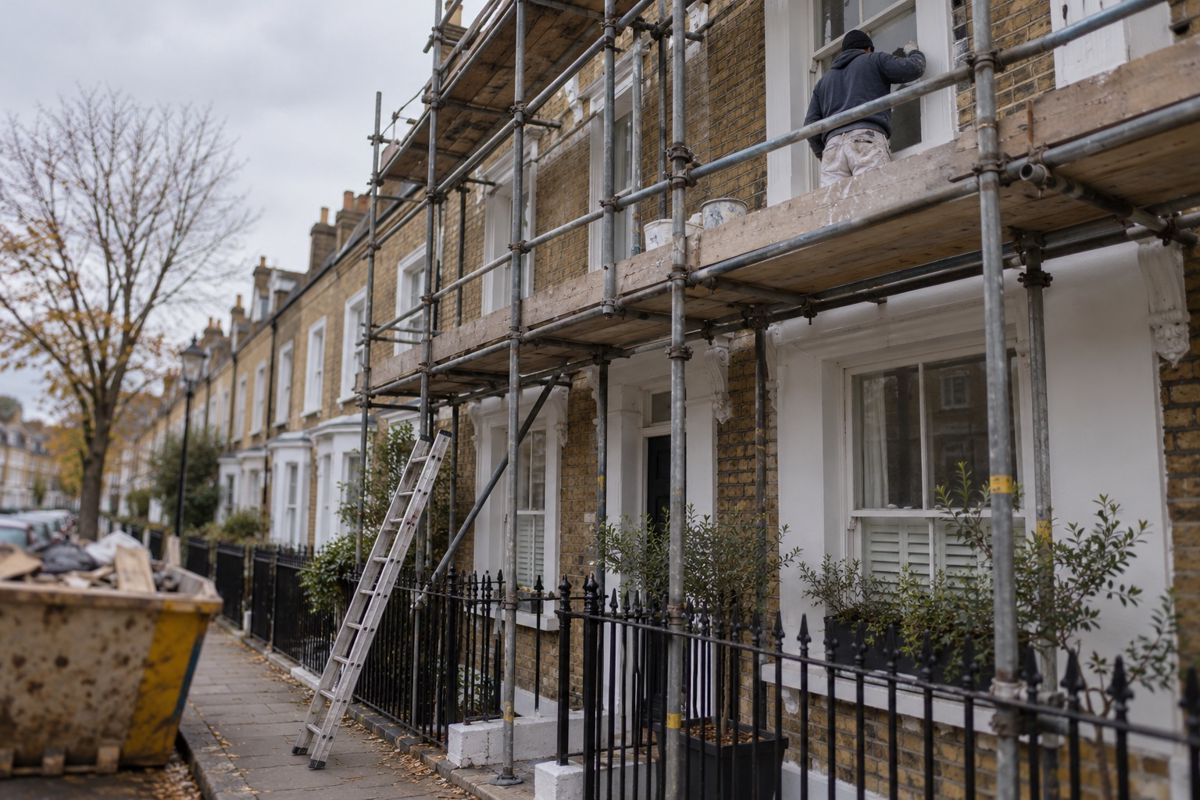
Scaffolding is one of the biggest single items on an exterior job. Anything above comfortable ladder height needs proper access, and most London houses have two or three storeys. A tower on one elevation may cost a few hundred pounds, while a full scaffold around a three-storey house can run to well over £1,000. Those figures are a broad guide only.
If the scaffold sits on the pavement, the council usually requires a licence, and the scaffolding firm typically arranges it. Narrow streets, no parking and tight side passages can raise the cost further because set-up takes longer.
Painters often arrange scaffolding for you, which keeps things simple. If you hire a scaffolder separately, make sure the dates line up with the painting so you are not paying for scaffold that sits unused.
How much does repair and preparation add?
Preparation is where most of the time goes, and it is why two houses of the same size can be priced very differently. Older London homes often need:
- Cracks in render or stucco filled and made weatherproof
- Rotten window sills and sash rails cut out and repaired
- Flaking paint scraped back to a sound surface
- Gutters and downpipes that leak fixed, so walls can dry out
- Mould and moss washed off the lower walls
A house in good condition may only need washing and light filling. A house with years of neglect can need several days of repair before any paint goes on. Good painters will say so honestly, because painting over damaged surfaces means the job fails early.
A note on older homes
Homes built before the 1960s can contain old lead-based paint under newer coats. Safe preparation avoids dry sanding and uses wet methods and careful cleaning, which can take longer. Ask your painter how they plan to handle it.
Does the type of surface and paint change the price?
Yes. Smooth stucco, rough render, brick, pebbledash and timber all behave differently. Stucco and render usually need careful repair and a good masonry paint. Painting brick is slower because the surface is uneven and absorbs a lot of paint.
Older solid-wall houses generally do better with breathable paints, which let moisture out. Cheaper, plastic-like coatings can trap damp and fail sooner. A better paint costs more up front, but it can save you from repainting early. Dark colours can also need extra coats to cover properly, and strong colours may fade faster in sun.
Windows and doors are priced separately in many quotes. Sash windows with many small panes take much longer than plain frames, so the number and type of windows can change the total noticeably.
Do permissions or consent add to the cost?
Sometimes they add time rather than money, but it is worth checking before you book:
- Conservation areas. Some have extra planning controls that can cover changes to the front of a house. Ask your borough council.
- Listed buildings. Changing colour or finish can require listed building consent.
- Leasehold flats. The freeholder or managing agent normally controls the outside of the building, and the work may be arranged for the whole block. You may share the cost through the service charge.
These rules vary, so treat this as general guidance and confirm what applies to your property.
How can I compare quotes fairly?
The cheapest quote is not always the best value. Two prices can look far apart because they cover different amounts of work. Ask every painter to put the following in writing:
- Exactly which walls, windows, doors and woodwork are included
- What preparation and repairs are included, and what is not
- How many coats of paint, and which paint and finish
- Whether scaffolding is included, and who arranges it
- Who protects plants, paths and neighbours' property
- Start dates, how weather delays are handled and how payment is staged
Also ask to see proof of insurance, and ask what licences or memberships the painter holds, if any matter for your job. Do not assume. Ask.

A quote that is vague about preparation is a warning sign. A good quote reads like a plan, and you can check each line against the work.
What should I do next?
Start by looking over your house on a dry day. Note flaking paint, soft timber, cracks and damp patches, and photograph them. Then check whether your property is in a conservation area or leasehold, and speak to the council or freeholder if so.
When you are ready to get a written quote, read our page on exterior house painting in London to see what the work involves, or head to the home page to see everything we do. Give us the address, a few photos and what you would like painted, and we will explain the plan clearly.