
Skip to content
  • Free written quotes
  • Local painters
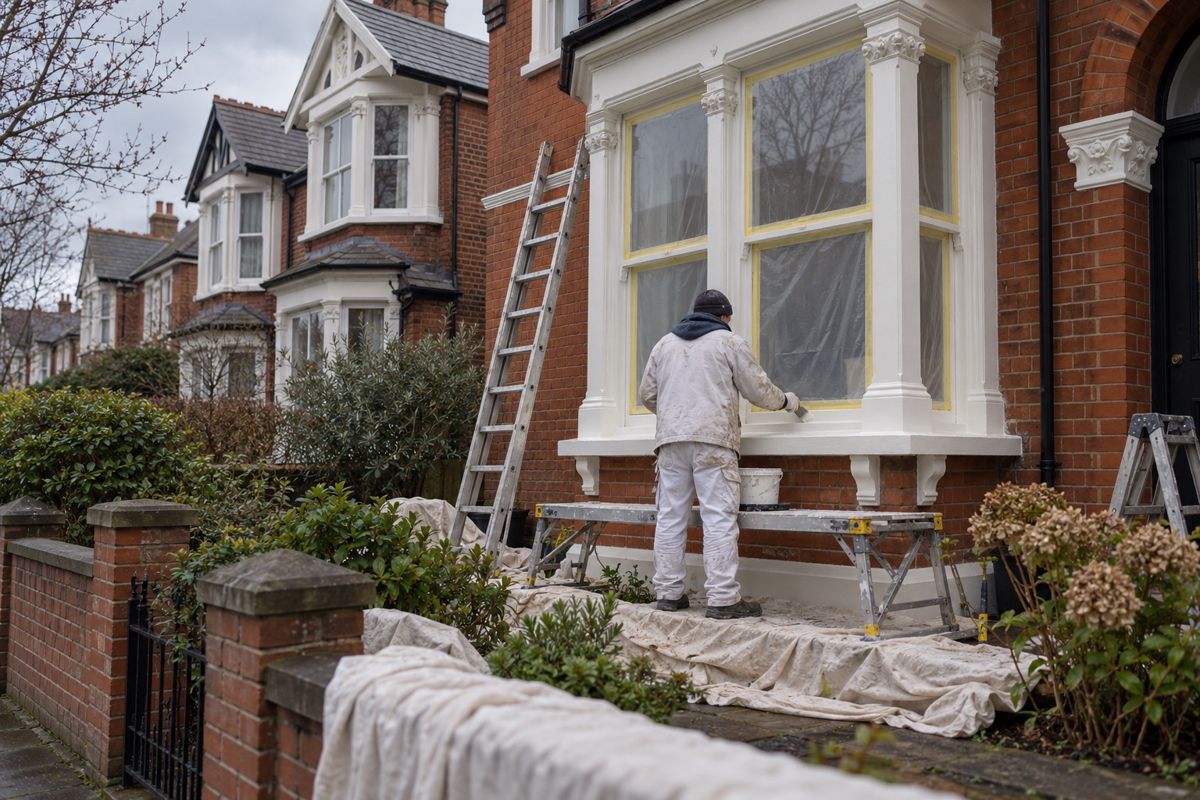
Painter brushing a bay window sill on an Edwardian London semi

Exterior painting in London

Exterior house painting in London for terraces, semis and flats

Brick, render, stucco, sash windows, doors and fascias, prepared properly and painted when the weather allows.

  • Brick, render and stucco fronts
  • Sash windows, doors and woodwork
  • A written quote that lists the preparation

Step 1 of 3

What needs painting?

What does exterior house painting in London involve?

Exterior house painting in London is mostly preparation. The paint on the wall is the last step of a longer job. A good repaint starts with washing the surfaces, scraping anything loose, repairing damaged areas and making sure the walls are dry enough to take paint.

A typical job covers some or all of the following:

  • Front and rear walls in brick, render, pebbledash or stucco
  • Sash and casement windows, sills and frames
  • Front doors, porches and railings
  • Fascias, soffits, bargeboards and rainwater goods
  • Boundary walls and garden gates

Higher walls need scaffolding or a tower, which can be arranged as part of the job. Ground floor work and low walls can often be done from ladders and platforms. We look at the height and access when we quote, so you can see what is included before work starts.

What problems do London houses have on the outside?

Many London homes are Victorian or Edwardian, and the same issues come up again and again.

Damp and failing paint

Old solid brick walls take in water and release it again. If a gutter leaks, the pointing is open or a downpipe overflows, the wall stays wet and paint blisters or peels. Painting over a wet wall hides the problem for a season. The cause should be fixed first, then the surface can be painted with a paint that lets the wall breathe.

Stucco and render cracks

Stucco fronts, common on grand terraces in parts of west and central London, crack and lose small pieces over time. Cracks need filling and flexible repairs before painting, or water gets in behind the new coat.

Rotten timber and old sash windows

Window sills and the bottom rails of sashes are the first places to rot. Soft timber is cut out and repaired with filler or new wood before it is painted. Painting over soft wood only buys a little time.

Lead paint on older homes

Homes built before the 1960s may have old lead-based paint under later coats. Dry sanding can create harmful dust. Ask any painter how they plan to deal with it, and expect wet methods, careful cleaning and protection for the garden and the neighbours.

Do I need permission to paint the outside of my house in London?

Often you do not, but it depends on the property. These are the common situations to check before you book.

  • Conservation areas. Many parts of London are conservation areas. Some have extra planning controls, called Article 4 directions, that can cover changes to the front of a house. Your borough council can tell you what applies.
  • Listed buildings. Changing the colour or finish of a listed building can need listed building consent. Check with the council first.
  • Leasehold flats. The freeholder or managing agent usually controls the outside of the building. You normally need their approval, and the work may be arranged for the whole building.
  • Painting bare brick. Painting brick that has never been painted is hard to reverse and can trap moisture. Some areas and some freeholders do not allow it.

These rules vary by borough and by property, so treat this as general guidance and confirm with the council or your freeholder.

We quote in writing after seeing the house, because no two exteriors are the same. The things that move the price most are:

  • The size of the house and how many storeys it has
  • Scaffolding or access equipment, especially on tall or narrow terraces
  • The condition of the surfaces and how much repair is needed
  • The type of surface, such as smooth stucco, rough render or brick
  • The number of windows, doors and areas of detailed woodwork
  • The paint system chosen, including breathable masonry paints

Narrow streets can add cost too. Where parking and deliveries are hard, set-up takes longer. To compare quotes fairly, ask each painter to list the preparation, the number of coats and the paint they plan to use. Inside work is priced differently, and you can read about that on our interior painting page.

How long does it take, and when should I call?

A terraced house usually takes several days to a couple of weeks, once any scaffolding is up, depending on repairs and the weather. Larger semis and detached houses take longer. Rain pauses the work, and paint needs dry surfaces to cure, so dates are planned with a margin.

On the day, expect dust sheets over plants and paths, scaffolding or ladders at the walls, and work that starts with washing and scraping rather than paint. Colours are agreed before the first coat goes on.

Call when paint is flaking, when sills feel soft, when render sounds hollow, or before the dry months when everyone else is booking. If you are also thinking about the garden, deck staining can often be planned at the same visit. Go back to the home page for the full list of services, or call 020 7946 0840.

  • Free written quotes
  • Local painters
  • Careful prep
  • Tidy finish

Questions about painting in London

How often does a London house need exterior repainting?

There is no single answer. It depends on the paint used, how well the surfaces were prepared and how exposed the walls are. Woodwork on sunny or windy faces usually needs attention sooner than shaded masonry. A walk round every year or so, looking for flaking paint, hairline cracks and soft timber, tells you when to book.

What time of year is best for exterior painting in London?

Spring to early autumn gives the best chance of dry, mild days. Paint should not go on wet walls or in frost, and damp mornings slow drying. London weather is changeable, so a good plan has spare days built in. Booking early in the year helps you get a place before the busy months.

Can you paint stucco and render?

Yes, they are a common part of exterior work. Stucco and render need cracks filled, loose areas repaired and a clean, dry surface. A breathable masonry paint is usually the right choice so moisture can escape. Smooth stucco shows every flaw, so preparation matters more than the colour you choose.

Do I need scaffolding, and who arranges any permits?

Anything above easy ladder height normally needs scaffolding or a tower. If scaffolding sits on the pavement, the council usually requires a licence, and the scaffolding company often handles that. We tell you at the quote stage what access the house needs, so nothing about it is a surprise.

Will new paint hide damp on my walls?

No. Paint over a damp wall will blister and peel again, often within months. The first job is to find the cause, such as a broken gutter, open pointing or a leaking pipe, and fix it. Once the wall has dried out, it can be painted with a suitable breathable paint.

Should I warn my neighbours before the work starts?

It is a good idea. Scaffolding, ladders, noise and dust affect people next door, and in terraces the work often touches shared boundaries. A short note with the dates avoids upset. If the house shares a wall, ask us about the details in advance so access can be planned.

Request exterior painting

Tell us what you need and we call you back.

Step 1 of 3

What needs painting?

No obligation.

Ready when you are

Call now or request a quote online.

020 7946 0840

How it works

  1. Tell us about the job

    Rooms or exterior, colours and timing.

  2. Visit and written quote

    We measure and price it in writing.

  3. Prep, paint, tidy up

    Floors and furniture protected, clean lines, cleanup.