
Skip to content
  • Free written quotes
  • Local painters
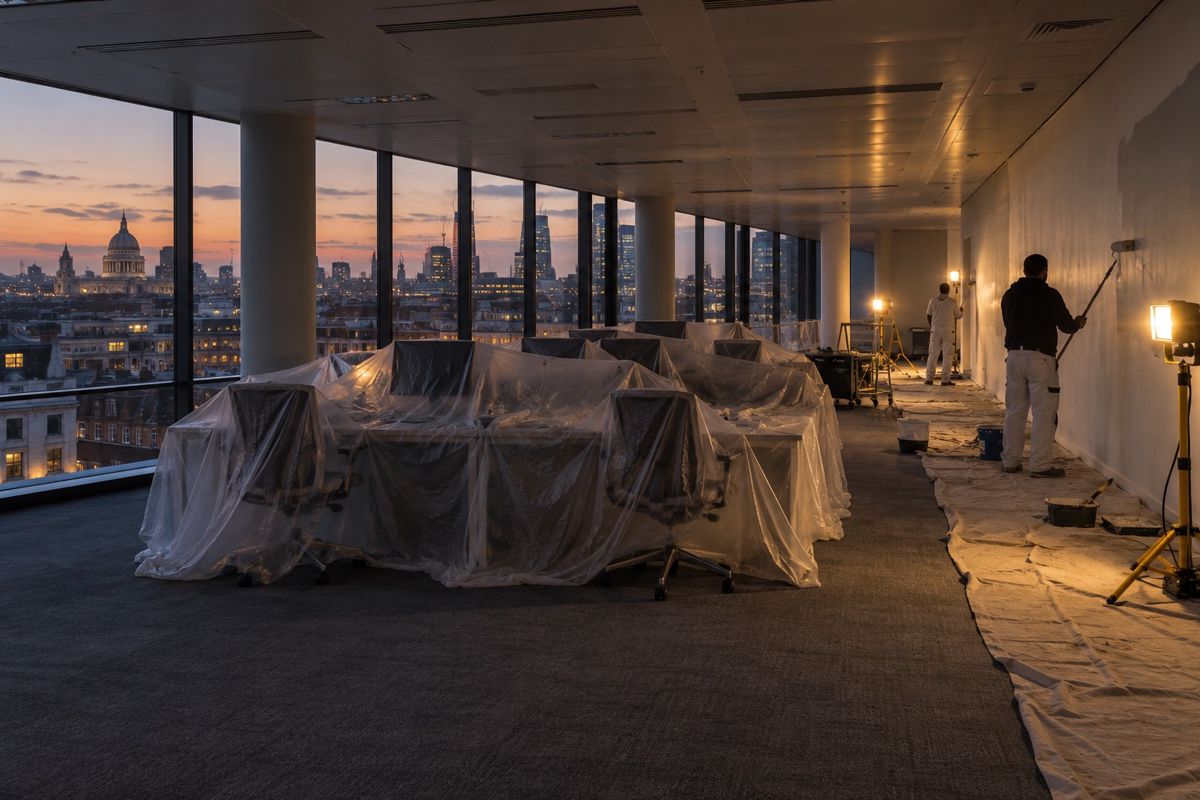
Evening repaint of an office corridor in London with furniture under sheets

Commercial painting in London

Commercial painting in London for offices, shops and shared buildings

Repaints planned around your opening hours, your landlord's rules and the people who use the space.

  • Offices, shops, restaurants and clinics
  • Work planned around trading hours
  • Written scope before work starts

What does commercial painting in London cover?

Commercial painting in London covers working buildings rather than homes. The aim is the same, a clean and lasting finish, but the planning is different because other people are using the space.

Typical jobs include:

  • Offices, reception areas, meeting rooms and corridors
  • Shops, showrooms and restaurants, including shopfront woodwork
  • Clinics, studios and small workshops
  • Stairwells, entrance halls and shared areas in blocks of flats
  • Doors, railings and other metalwork and woodwork

Commercial walls take more knocks than home walls, so the paint matters. Washable, scuff-resistant finishes are usual in corridors and public areas, and lower-odour products help in occupied buildings. We list the paint system in the written scope, so you know what you are getting before the first brush is lifted.

Can you paint without shutting the business?

Often, yes, with planning. The usual approach is to work out of hours or in sections, so part of the space stays open while another part is painted.

  • Evenings and weekends. Offices and shops can be painted when nobody is in, then handed back ready for the next working day.
  • Phased areas. A large floor or shop is split into zones, with furniture and stock moved by zone.
  • Dust and odour control. Sanding is kept to a minimum, floors and fittings are covered, and low-odour paints are used where possible.
  • Building access. Lifts, loading bays, security and reception sign-in all need to be arranged with the building manager.

Tell us your opening hours, any alarm or key-holder arrangements and anything that cannot be moved when you ask for a quote. A realistic plan is more useful than a rushed one, and it is much cheaper than a repaint that has to be redone.

What rules and paperwork should I check first?

Commercial premises come with a few extra checks. These are general points, so confirm the details for your building.

  • Landlord consent. If you rent, your lease may require approval for decoration, colours or changes to the shopfront.
  • End of lease. Many commercial leases ask for the premises to be redecorated or returned in a set condition. Read the repair and decoration clause.
  • Asbestos. Older commercial buildings may contain asbestos. The person responsible for the building should hold an asbestos register, and it should be checked before surfaces are sanded or drilled.
  • Fire safety. Escape routes, fire doors and signage must stay clear. Special fire-protection coatings are specified by professionals and are not an ordinary paint job.
  • Working at height. Stairwells and tall shopfronts need proper access equipment.

If you manage a shared building, tell tenants in good time so they know the dates and any access restrictions.

We quote in writing against a clear scope, because commercial jobs vary widely. The factors that move the price most are:

  • The total area of walls, ceilings and woodwork
  • Out-of-hours working compared with working in a quiet building
  • Ceiling height and the access equipment needed
  • Condition of the surfaces, such as damage, stains or old wallpaper
  • The paint specification, including washable or low-odour products
  • How much furniture and stock must be moved, and by whom
  • Parking, loading and access limits at the building

A visit before the quote is the best way to avoid surprises. Compare quotes by checking that each one covers the same rooms, the same number of coats and the same finish. If part of your building is a home or flat, our interior painting page explains how residential work is planned.

How long does it take, and when should I call?

A small shop or office can often be repainted over a long weekend or a few evenings. Larger premises, stairwells or buildings with several floors are planned over days or weeks, depending on how the space is used. Paint needs drying time between coats, and busy areas should not be used until they are dry to the touch.

On the day, expect clear start and finish times, protected floors and fittings, and a tidy handover at the end of each session. You will know who is on site and what area is being worked on.

Call when the walls look tired in front of customers, before a new tenant moves in, when a lease is coming to an end, or when a refit is planned. For outdoor work, see exterior house painting or head back to the home page. You can also call 020 7946 0840.

  • Free written quotes
  • Local painters
  • Careful prep
  • Tidy finish

Questions about painting in London

Can you paint outside of opening hours?

Often, yes. Many commercial jobs are done in the evenings or at weekends so the business can keep trading. Out-of-hours work is usually priced differently from daytime work, and it depends on building access and security. Tell us your hours and who holds the keys, and we will plan around them.

Will the building smell of paint when we reopen?

Low-odour paints cut down on smell, and ventilation helps, but you should expect a little scent after painting. Planning the last coat for the evening before reopening, and keeping windows or extraction running, reduces it. Tell us if the space is a food business, clinic or anywhere sensitive to odour.

Do I need my landlord's permission to repaint?

If you rent the premises, check your lease. Many leases need written approval for changes to colours, shopfronts or finishes, and some say how premises must be redecorated at the end of the term. Asking first avoids disputes later. If you manage the building, you decide what is allowed for tenants.

What should we know about asbestos in older buildings?

Buildings from before the year 2000 can contain asbestos in some materials. The person responsible for a commercial building is expected to manage it, usually with a register and survey. Ask for it before sanding or drilling begins. If you are unsure, check with the building manager before any work is booked.

Can you repaint a shopfront?

Often yes, including timber fascias, frames and doors, as long as access and permissions are in place. Shopfronts on the street may need pavement space for scaffolding or towers, and the landlord or council may have rules on colours, especially in conservation areas. Tell us the location when you get in touch.

Request commercial painting

Tell us what you need and we call you back.

Step 1 of 3

What needs painting?

No obligation.

Ready when you are. Call now or request a quote online.

How it works

  1. Tell us about the job

    Rooms or exterior, colours and timing.

  2. Visit and written quote

    We measure and price it in writing.

  3. Prep, paint, tidy up

    Floors and furniture protected, clean lines, cleanup.