
Skip to content
  • Free written quotes
  • Local painters
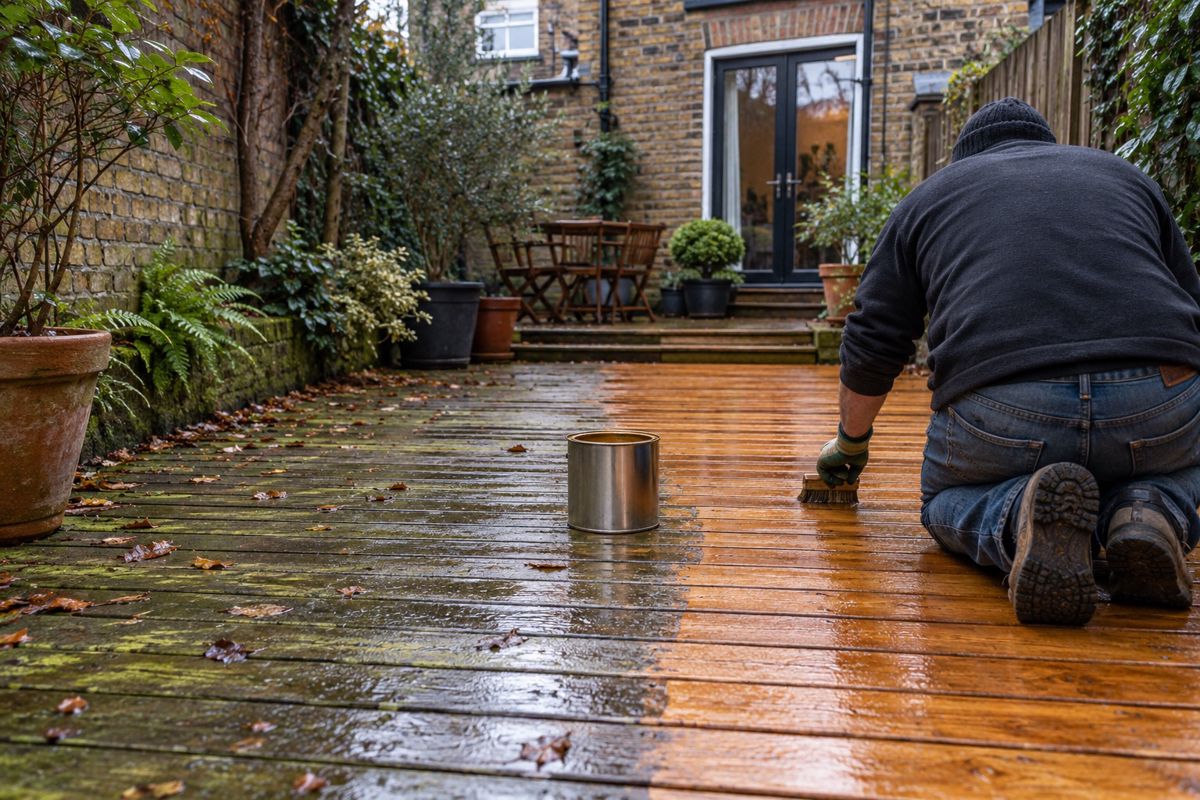
Freshly oiled decking in a small walled London garden with moss still visible

Deck staining in London

Deck staining in London for gardens, terraces and balconies

Cleaning, preparation and a stain or oil that suits your decking, so it stands up to a damp climate.

  • Gardens, roof terraces and balconies
  • Cleaning and sanding before staining
  • Finishes chosen to suit the wood

Step 1 of 3

What needs painting?

What does deck staining involve?

Deck staining is not just brushing colour on boards. The wood has to be clean, dry and open enough to take the finish, or it will peel or wear off in patches. The steps are usually these:

  1. Sweep the deck and clear out the gaps between boards.
  2. Wash the surface to remove dirt, moss and algae.
  3. Strip or sand off any old finish that is flaking.
  4. Use a brightening treatment where the wood has turned grey.
  5. Let the deck dry properly, which can take a couple of days in damp weather.
  6. Apply stain or oil in thin coats, working along the length of each board.

The edges of boards, steps and the underside of rails are easy to miss and where rot starts first, so they get attention too. Tell us what the deck is made of and what finish is on it now when you get in touch, and we will write the plan into the quote.

Which decking suits staining in London gardens?

Most London decks are softwood, often pressure-treated, or hardwood such as balau or ipe. Both can be stained or oiled. Composite boards do not need staining, though they can still be cleaned.

Softwood decking

Softwood is affordable but soaks up water, so it needs regular care. A good stain or oil slows greying and helps shed rain.

Hardwood decking

Hardwoods are denser and last longer, and most owners use oil to keep the colour. Without it they weather to silver grey, which is fine if you like that look.

Roof terraces and balconies

Many flats have a roof terrace or balcony deck. These often sit on a waterproof membrane that must never be pierced, so work is kept gentle. In leasehold buildings, check with the freeholder before changing the finish, as the terrace may be part of the building rather than your flat.

Why does decking go green, grey or slippery in London?

A mild, damp climate is ideal for moss and algae. In London the problem is often made worse by the garden itself:

  • Small gardens enclosed by tall walls and fences get little direct sun.
  • Trees drop leaves that sit in the gaps and hold water.
  • Decks built low to the ground have poor airflow underneath.
  • Shaded, north-facing decks stay damp for days after rain.

A green film is also a slip risk, especially on steps. Washing and re-staining often fixes it, but if the boards are soft, spongy or splitting, the timber may need repair or replacement first. Staining over rot does not stop it. Improving drainage, trimming back planting and keeping leaves swept off are the cheapest ways to make any finish last longer.

Stains add colour and soak into the wood, oils feed it and bring out the grain, and deck paints sit on top and hide it. Paint can look neat but may peel on busy decks. Which you pick depends on the wood and how it looks now.

We quote in writing after seeing the deck. The things that change the price most are:

  • The size of the deck and how many steps it has
  • The condition of the boards and how much old finish must come off
  • Whether moss, algae or grey weathering needs treating
  • Railings, balustrades, pergolas and fences included in the job
  • Access, for example when materials must be carried through the house
  • The type of stain or oil and the number of coats

For pubs and restaurants with outdoor seating, see commercial painting, which covers planning around opening hours.

How long does it take, and when should I call?

A small garden deck can often be cleaned, prepared and stained in a few days, with extra time for drying. Larger decks, many steps or heavy old finishes take longer. Staining needs dry boards and settled weather, so spring to early autumn is the best time. Stain applied in damp or cold conditions can stay tacky or fail early.

On the day, expect the area to be cleared of furniture and pots, plants nearby to be covered, and the deck to be out of use while the finish dries. We will tell you when it is safe to walk on again.

Call when the deck turns grey, water no longer beads on the surface, or green patches have appeared. If fences or the house walls need attention as well, see exterior house painting, or return to the home page. You can also call 020 7946 0840.

What you can expect

  • Free written quotes

  • Local painters

  • Careful prep

  • Tidy finish

Questions about painting in London

How often should decking be stained in London?

It depends on the wood, the finish and how much sun and shelter the deck gets. Shaded, damp decks usually need attention sooner than open, sunny ones. A simple test is to sprinkle water on the boards. If it soaks in rather than beading, the finish is worn and it is time to clean and recoat.

Can you stain a deck that is already green or grey?

Yes, but the surface needs treating first. Moss and algae are washed off, grey weathered wood is brightened or lightly sanded, and the deck is left to dry. A finish put on top of a dirty surface will not hold. If the boards are soft, they may need repair before any staining.

How long before I can use my deck again?

It depends on the product and the weather. Light foot traffic is often possible after a day or so, but furniture and heavy use are better left a little longer so the finish can harden. Cool, damp London days slow drying. We will tell you what applies to the finish used on your deck.

Can a roof terrace or balcony deck be stained?

Often yes, but take care. Many terraces sit on waterproof layers that must not be damaged by scraping, strong chemicals or drilling. Check your lease, because the terrace may belong to the freeholder. Tell us about the construction when you get in touch so we can plan gentle cleaning and the right finish.

Do I need to stain composite decking?

No. Composite boards are made to be low-maintenance and are not meant to be stained. They can still go green in damp, shaded gardens, so a wash with the right cleaner now and then keeps them looking tidy. If you are unsure what your deck is made of, send us a photo.

Request deck staining

Tell us what you need and we call you back.

Step 1 of 3

What needs painting?

No obligation.

Ready when you are. Call now or request a quote online.

How it works

  1. Tell us about the job

    Rooms or exterior, colours and timing.

  2. Visit and written quote

    We measure and price it in writing.

  3. Prep, paint, tidy up

    Floors and furniture protected, clean lines, cleanup.