
Skip to content
  • Free written quotes
  • Local painters
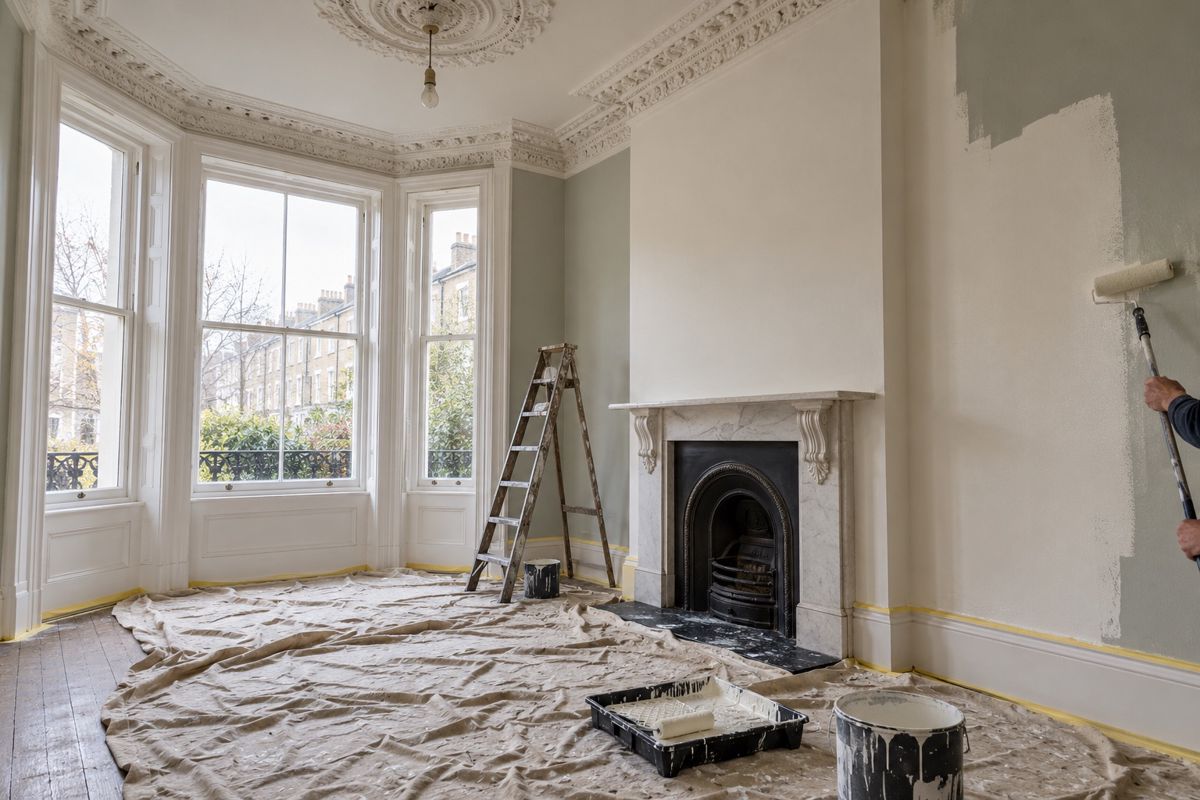
Repainting a high-ceilinged Victorian London room with sash windows

Interior painting in London

Interior painting in London, from one room to the whole home

Walls, ceilings and woodwork in Victorian terraces, Edwardian houses and flats, prepared properly and finished neatly.

  • Walls, ceilings and woodwork
  • High ceilings and period features
  • Written quote with coats and paint listed

Step 1 of 3

What needs painting?

What does interior painting in London include?

Interior painting in London covers more than rolling colour onto a wall. A proper job includes protecting floors and furniture, repairing the surfaces, and painting in the right order: ceilings first, then walls, then woodwork.

Most interior jobs include some mix of:

  • Walls and ceilings in living rooms, bedrooms, hallways and stairwells
  • Skirting boards, architraves, doors and window frames
  • Picture rails, coving and ceiling roses
  • Filling holes and cracks, sanding smooth and sealing stains
  • Fresh plaster, which needs a thinned first coat before the main colour

You can book a single room, a hallway, or the whole home. Whole-home jobs are often planned room by room, so you can keep living in part of the house while the work moves through it. Tell us what you want when you get in touch and we will list it in a written quote.

What is different about painting a Victorian or Edwardian home?

Older London homes have features that newer ones do not, and they change how the job is done.

High ceilings and ornate plasterwork

Ceilings of three metres or more are common in terraces and mansion flats. They need proper access equipment and extra time. Cornices and ceiling roses collect many layers of paint, which can blur the detail. Careful cleaning back before repainting keeps the shapes crisp.

Cracks, old plaster and damp

Lime plaster and lath and plaster move with the seasons, so hairline cracks are normal. Flexible filler and fresh caulk at joints help. Damp patches near chimney breasts, bay windows or outside walls need the cause found and fixed first. Paint should never be used to cover live damp.

Layers of old paint

Homes built before the 1960s may contain lead-based paint in the older coats. Avoid dry sanding, keep dust down, and keep children and pets out of the room while surfaces are prepared. Ask your painter how they handle it.

What should I check before painting a flat or leasehold home?

Flats make up a large share of London homes, and a few extra points are worth checking before you book.

  • Your lease. Some leases limit noisy work to set hours or ask you to tell the managing agent first.
  • Access and parking. Lifts, stairs, loading rules and resident bays affect how materials and equipment arrive.
  • Communal areas. Hallways and stairs need protection so the rest of the building is not marked.
  • Neighbours. A short note beforehand is polite, especially for ceilings and sanding.
  • Floors. Floors need covering, and wooden floors in older conversions are easily marked.

If the flat is rented, check with the landlord or agent first. Many tenancy agreements need written permission before repainting. Painting the inside of the front door and windows is usually fine, but the outside of them can belong to the freeholder.

We quote in writing after seeing the rooms, or after going through photos and measurements. The main things that change the price are:

  • The number of rooms and the total wall and ceiling area
  • Ceiling height, which can mean towers or scaffold boards
  • How much of the woodwork is included, such as skirting, doors and sashes
  • The state of the walls and how much filling and sanding is needed
  • Dark colours, which often need extra coats
  • Whether furniture must be moved or the rooms are empty

Empty rooms are quicker to paint than rooms full of furniture, so clearing the space yourself before the crew arrives helps. Ask each painter to say how many coats are included and which paint and finish they plan to use, so quotes can be compared fairly. If your kitchen cabinets also look tired, see kitchen cabinet painting, which is quoted separately.

How long does it take, and when should I call?

One room often takes a day or two once repairs are done. A hallway and stairwell takes longer than people expect because of the height and the amount of woodwork. A whole house can take a couple of weeks, longer with repairs. Paint needs time to dry between coats, so rushing is not a good sign.

On the day, expect furniture to be grouped and covered, floors protected, and the crew to work through washing, filling, sanding, priming and then paint. Windows are opened for ventilation where possible. A short walk-round at the end lets you point out anything to touch up.

Call when walls look marked, when ceilings have old stains (once any leak has been fixed), or before you move into a new home, while the rooms are empty. For offices and shops see commercial painting, or head back to the home page. You can also call 020 7946 0840.

What you can expect

  • Free written quotes

  • Local painters

  • Careful prep

  • Tidy finish

Questions about painting in London

How many coats of paint will my walls need?

Most walls need a primer or sealing coat where there is new plaster, filler or a big colour change, followed by two finish coats. Going from dark to light can take more. Your written quote should say how many coats are included, so you know what is being priced and can compare it fairly.

Can I stay in the house while it is being painted?

Usually yes. Work is often planned room by room, and windows are opened for fresh air. Some people prefer to be out for sanding days or when strong-smelling products are used. Tell us about children, pets or anyone sensitive to fumes so we can choose products and plan the order of rooms with that in mind.

Should I choose matt, satin or gloss?

Matt hides small flaws on walls and ceilings and suits living rooms and bedrooms. Satin and eggshell wipe clean more easily, which suits hallways, kitchens and bathrooms. Woodwork usually gets satin or gloss for durability. Look at samples on the wall in morning and evening light, because London homes can differ a lot in daylight.

Do you move furniture?

Light furniture is usually moved to the middle of the room and covered. Heavy items, delicate pieces, electronics and anything fragile are best cleared by you beforehand. Tell us when you ask for a quote what will still be in the rooms, because empty rooms are faster to paint and that is reflected in the plan.

Is it safe to paint over old lead paint?

Homes built before the 1960s may have lead-based paint under newer coats. Painting over sound paint with proper preparation is often how it is managed, but dry sanding should be avoided. Wet methods, careful cleaning and good dust control matter. If you are unsure, ask for advice on testing before work starts.

What if my ceiling has a damp stain?

Find and fix the leak first, then let the area dry fully. After that, the stain is sealed with a stain-blocking primer before the ceiling is painted, or the stain will show through again. Painting over a stain with an active leak above only hides it for a short time.

Request interior painting

Tell us what you need and we call you back.

Step 1 of 3

What needs painting?

No obligation.

Ready when you are

Call now or request a quote online.

020 7946 0840

How it works

  1. Tell us about the job

    Rooms or exterior, colours and timing.

  2. Visit and written quote

    We measure and price it in writing.

  3. Prep, paint, tidy up

    Floors and furniture protected, clean lines, cleanup.